Saturday, May 13, 2006

Egg-zactly Like Mama!


"There was a big eggplant who lived in a stew, she had so many children, she didn't know what to do!" A thousand pardons to the old nursery rhyme, but really, storing "old" eggplants in a "shoe" just doesn't sound very appetizing, does it?

Though, if one DID store eggplants in a shoe, quite a lot of them could easily be made to fit -- IF they were of the miniature variety. It is very tempting to refer to the mini variety as "baby" eggplants, especially on Mother's Day weekend!

Some of these babies look "egg-zactly" like their Mama, in miniature. Actually though, miniature eggplants may be one of several distinct varieties and not necessarily the younger specimens of standard eggplant.

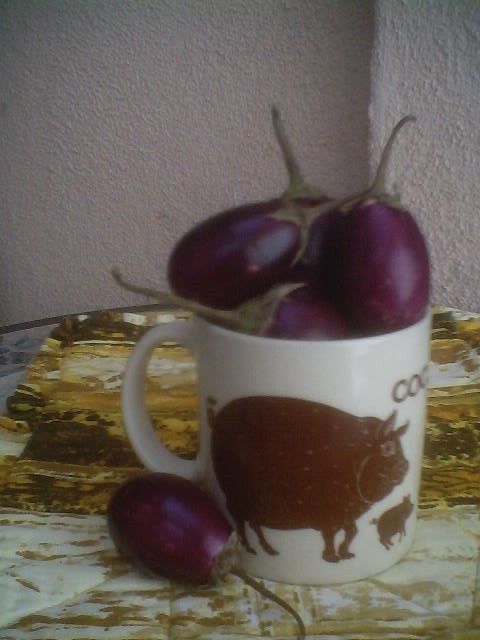
Those shown in the photo are usually referred to as Italian or Baby Eggplants. Understandably, they look exactly like their larger counterparts, with dark-and-shiny deep-purple skin -- just baby-sized.

Other small-format eggplants include Italian Rosa Biancos, which are white-violet in color; Chinese eggplants, which are pale violet, slim-sized; and Thai Apple eggplants which are round, green and the general size and shape of a small apple.

Sometimes Japanese eggplants are simply picked at a very young stage. Small, and slim, these medium purple eggplants are not miniatures in the strict sense of the word. Though that does make them "baby" eggplants by definition, I suppose!

With thinner skins and fewer seeds, miniature eggplants are generally sweeter and more tender than the larger varieties. Their edible skins add a good fiber dimension to their nutritional profile.

Reflecting today's interest in heirloom vegetables, a larger assortment of miniature eggplants is reappearing in backyard and truck gardens. Eggplants of many descriptions are available year round, though the peak growing season in the U.S. is from July to October.

Just this weekend, I found miniatures available for the first time this season at my local farmer's markets, just in time for Mother's Day. Florida, New Jersey, California and Mexico are home to the major North American sources.

Eggplants are great flavor sponges. They love to combine with more-intense flavors such as tomatoes, onions, garlic and/or cinnamon. Herbs, with their intrinsic depths of flavor, are another particularly-good pairing with eggplant.

The miniature eggplant varieties are so easy to use because they are thin-skinned and don't need to be peeled. A quick wash and slice, and they are ready to march straight into a waiting cook pan like obedient little soldiers who are all dressed up in their best, colorful uniforms.

My tried-and-true quick-roast method always works beautifully and is my "go-to" preparation method. I just trim off the tops of the little eggplants, halve them lengthwise, put them onto a baking sheet, drizzle them with some good extra-virgin olive oil, and then top with some salt, pepper, garlic powder, cinnamon and woodsy herbs (I think that rosemary and thyme blend especially well).

In the oven (or toaster oven -- mini veggies being VERY comptible with mini ovens!) at 400 to 425 degrees for 15 to 25 minutes, these little mini-halves roast up caramelized, lightly-brown and delicious. The "to the tooth" component of soft eggplant flesh contrasted with slightly-chewy skin, popped into the mouth for satisfying little flavor explosions, is the extra pleasure of the mini eggplant format.

Of course, mini eggplants are great additions to pasta sauces, soups, casseroles and quicker-cooking stews, just as larger-format eggplants are. Their subtle flavor simply seems to meld compatibly with so many other ingredients. To maintain the pretty color and pleasing texture of the skin, they simply should be added near the end of the cooking process.

The quesions of why eggplants are called "eggplants" is similar to the old chicken-and-egg question. Hmmm -- are all "eggy" things questionable and unanswerable? Some state emphatically that eggplants are so named because the most-common, Italian version is shaped like an egg. Others contend, just as strongly, that eggplants received their name because a traditional preparation method involves dipping slices into beaten eggs and then frying.

The Ingredient Sleuth is wise enough to sidestep that debate. Or perhaps to combine it! My reaction to it is simply to slice up miniature egg-shaped eggplants into omelets and frittatas and even scrambled eggs! If one "egg" product is good, the combination of two HAS to be even better!

I'm sure that the baby eggplants' mothers, like all Mamas, would be ever so proud of them for playing so well with other ingredients! If all those little baby eggplants DID live with their mother in the stew, I'm sure that THEY would know WHAT to do!

Bon appetit -- and Happy Mother's Day!


Thursday, May 04, 2006

Mitsuwa Japanese Market


Near the coast, here in southern California, we are experiencing weather of the "premature" variety. The infamous "June Gloom" typically brings cloudy-and-damp-and-foggy conditions to locations within several miles of the ocean -- during June. If lucky, the phenomenon gives way to our usual sunny conditions by late morning or early afternoon. If not so lucky, the gloominess -- what my Aunt Cathryn would call a "dumpy day" in the Midwest -- hangs in there all day.

The all-day variety of June Gloom has been in evidence here for a couple of weeks now. Of course, it is still far from June, but the weather calendar here and in many parts of the world seems confused of late! In times of dumpy weather, my thoughts inevitably turn to comfort food. The tried-and-true meatloaf, macaroni and cheese, sauerkraut and dumplings (my Germanic heritage coming to bear), baked potatoes and chicken. Steaming soups and stews warm heart, soul and body.

For a bit different take on that approach, I like to keep some nifty Japanese ingredients at-the-ready in my pantry. On a moment's notice, those quick-serve noodle bowls are ready to warm up the chilliest of gloomy glumness. The automatic rice cooker gets into the act and sends the fragrance of light-and-white or brown-and-nutty rice throughout the house. The curry-mix packets turn my mundane protein leftovers into a stomach-warming trip to the other side of the world!

My favorite location at which to restock my Japanese ingredients is Mitsuwa Marketplace (http://www.mitsuwa.com/). Locations are sprinkled near major metropolitan areas throughout the U.S. For me, the nearest store is in Costa Mesa. That location, at just a stone's throw from the popular South Coast Plaza shopping mall, is a special type of shopping complex all its own.

In addition to a large grocery store, the complex features a Japanese book/video/music shop, cosmetics counter, Japanese health goods and vitamin shop, appliance shop and a baked confections counter. From time to time, temporary counters are set up to allow vendors to offer clothing, jewelry and sometimes even those terrific slip-on sandals with dozens of little bumps all over the inside of the sole to allow the do-it-yourself approach to foot massage!

On top of all that, I have had the pleasure of spending countless happy moments at the pottery and dishware shop, admiring (which all too often has turned to purchasing) a huge array of small-and-colorful dishware, teapots, lacquerware and chopsticks. The delicate Japanese designs of that dishware seem to amplify the flavors of every food they grace. Steaming miso soup just tastes better, somehow, when sipped from a gleaming, lacquerware bowl.

Right across the aisle from all of these dazzling retail offerings, a mini food court of Japanese restaurants beckons. The requisite display of those kitschy, plastic, look-alike foods helps Japanese-heritage and other customers make their selections for a tasty meal. Though one needs to order and pick up one's meal at a counter, the ever-careful pairing of food with serving ware is maintained by these restaurants. Pretty dishware makes the meal seem tastier -- and MUCH more Japanese -- than it ever would on a plasticized paper plate!

In most cases, eating before grocery shopping always seems to damp down my spending a bit. At the Mitsuwa Marketplace, my reaction is the exact opposite! Inspired by all the good, Japanese food that I have just eaten -- and all of the delicious items that I have just seen at tables all around me -- I hit the grocery aisles ready to load up on everything I can to enable myself to recreate the same dishes at home!

As if I weren't inspired enough already, weekends at the Mitsuwa grocery feature lots of samples to introduce new products and special offers. How CAN they taste so delectable when I am already SO stuffed from my lunch?

In addition to the huge variety of staple products, the produce, fresh fish and meats, prepared sushi, bakery and liquor departments offer tasty specialties. A charming little alcove houses a mini teahouse counter, staffed with a knowledgeable expert to help with any questions about Japanese teas or the formal Japanese tea service.

As I emerge from this treasure trove of Japanese culture, loaded down with plastic bags filled to the brim with more new flavors to try, I always marvel at what a great, small world our planet has become. Comfort -- and comfort food -- has shown up virtually on my doorstep from around the world. That's enough to drive an Ingredient Sleuth's June Gloom packing!

Saturday, April 15, 2006

A Hard-Boiled (Egg) Story


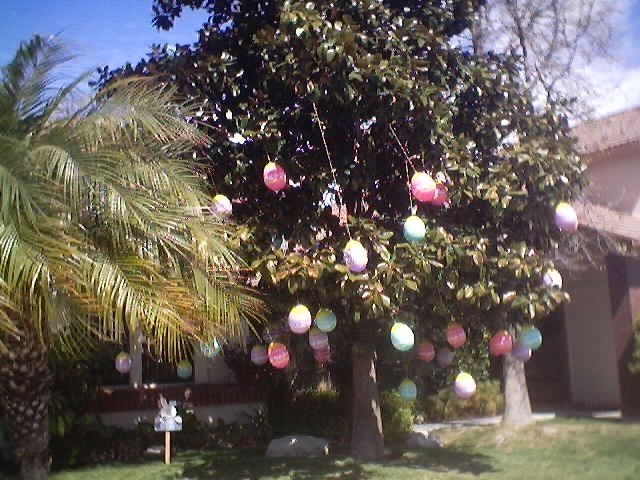
In my neighborhood, eggs seem to grow on trees! Giant, colorful eggs sprout once a year, in springtime, at just one house on the block. I’ve always wondered what the homeowners DO with all those eggs? And just how tall IS that Easter Bunny, to be able to attach the eggs to such a big tree? And, which DID come first, the tree – or the eggs?

Without delving deeper into this little piece of fiction, or into the infamous and unanswerable chicken-or-egg-first question, let’s just enjoy eggs for what they are and focus for a moment on this week’s favorite: the hard-boiled Easter egg. Whether delivered by the Easter bunny in baskets or buckets or on trees, these tasty hard-cooked, versatile eggs can be eaten from breakfast to dinner and all times in between.

Many different variations of cooking method have been promoted, from time to time. The most-common method simply involves placing eggs into a saucepan wide enough to allow them to sit in one layer without crowding, deep enough to allow one inch of water to cover the top of the eggs and a couple of inches more space to allow for boiling froth.

Over high heat, bring the eggs and water just to a full boil. Then, remove the pan from the heat immediately and cover with a tight-fitting lid. Let the eggs stand in the pan, covered for 15 minutes. Then, pour off the hot water and run cold water over the eggs to stop them from cooking and to make peeling easier.

Shelling hard-cooked eggs is also made easier by using eggs that are at least several days old, gently tapping the entire surface of the shell against a flat surface and peeling from the large end. Some people like to peel eggs under running water to further assist in the shell-removal process.

The following delicious recipe using hard-boiled eggs comes from the LIDIA’S FAMILY TABLE cookbook (Alfred A. Knopf Publishers, New York, 2004), by Lidia Matticchio Bastianich with David Nussbaum. Techniques and recipes from this book are also featured in Ms. Bastianich’s syndicated PBS-TV series.

Both the TV show and the cookbook allow aspiring Italian cooks to spend some virtual time in Lidia’s kitchen and learn the techniques that she uses – the ideas and methods that were passed to her through her family and that she has developed for use in her highly-popular restaurants in New York City, Pittsburgh and Kansas City.

Starting from the basics, Ms. Bastianich describes beloved Italian everyday favorites and then progresses to tried-and-true variations, improvisations and cook-to-cook tips – just as she would if standing next to a cooking enthusiast in her own kitchen. As she so often says on her TV show, she doesn’t want people to be a slave to the recipes but just to get ideas to use in their own cooking. A devoted author and nationwide lecturer, she also provides lots of information and ideas at her website: http://www.lidiasitaly.com/.

So, let’s gather up those hard-cooked Easter eggs and get started!

CAULIFLOWER AND EGG SALAD
(Serves 6 or more)

1 large head cauliflower (1-1/2 to 2 pounds)
½ teaspoon or more salt
3 hard-boiled eggs
3 tablespoons or more white wine vinegar
¼ cup or more extra-virgin olive oil
Freshly ground pepper to taste

Tear off all the outer leaves attached to the base of the cauliflower; reserve any tender green leaves. Cut out the bottom core, and snap or slice off all the big florets from the inner stem. Cut the florets into 1-inch chunks or thick slices (don’t break them up into tiny florets).

Bring 3 or 4 quarts of water in a large pot to the boil, drop in the florets and reserved leaves, and cook, uncovered, at a steady boil for 5 minutes, or until cooked through but not soft. Lift out the cauliflower, spread the pieces out in a colander, and sprinkle with ¼ teaspoon of the salt. Cool to room temperature.

Before serving, slice the eggs in wedges, and cut the wedges into 2 or 3 pieces each. In the bottom of a large mixing bowl, whisk together the vinegar, oil, another ¼ teaspoon salt, and grinds of pepper. Put all the cauliflower in the bowl, and tumble to dress all the pieces. Scatter the egg pieces over the top, and fold them in. Taste, and adjust the seasonings.

Arrange the salad on a serving platter, or portion on salad plates.

*Copyright Note*: Lidia Bastianich specifically authorized this recipe reprint, by the Ingredient Sleuth, in this posting.

The additional notes to the recipe indicate that this dish is good as a first course, a side dish or a partner with broccoli for a supper dish. As Lidia says, “At my grandma’s house, we used to have this kind of salad many a time, with a slice of homemade bread and some good cheese, for supper.”

The LIDIA'S FAMILY TABLE cookbook is filled with photos -- of beautiful food and of four generations of Lidia’s family-- showing the ways in which food serves as an integral part of the family's routine, creating an ongoing interaction among all generations. For the Ingredient Sleuth, those photos and the explanations never fail to bring a smile. Somehow, Ms. Bastianich has managed to capture, in book format, those person-to-person encounters that magnify all good cooking and good food.

As the Easter baskets are gathered and the pyramid of colorful eggs is placed lovingly in that bowl in the refrigerator, I hope that today’s recipe comes in handy. Enhanced by the addition of just a few additional ingredients, those eggs of the hard-boiled variety will be ready to be gobbled up by eager salad eaters in no time!

Happy Easter, buon appetito -- and as Lidia says at the close of every TV show, "tutti a tavola a mangiare!" (All to the table to eat!)