Showing posts with label Shelf Ingredients. Show all posts

Friday, August 12, 2005

Aceto Balsamico di Modena


10-Year-Old Balsamic Vinegar from Trader Joe's


“This one is bright and quite sharp, with a definite acidic hit in the back of the mouth,” said Blondielocks. “I will sprinkle it on roasted vegetables and stir-fries and make some tasty marinades, maybe some sweet-and-sour sauces with it.” And Mama Bear agreed.

“Oh, this one is richer, with a sweeter finish,” Blondielocks purred. “It will be perfect for my salad dressings and to deglaze the pan with dark, woodsy juices after searing some lovely, tender meat.” And Papa Bear concurred.

“Oh my, oh my!” Blondielocks crooned. “This one is so thick, dark, full-bodied and sweet that I may have to sip it straight from the bottle! And there is only sweetness, no sharpness at all.” And Baby Bear knew that THIS was the one for him as well. “Hooray, hooray,” he cheered, “let’s put a few, thick drops on ice cream, melon, Parma ham, figs, strawberries and such!”

Blondielocks and the three bears (apologies to Goldilocks, but the usual porridge story just wouldn't do, for THIS table fable!) couldn’t have been more correct and in tune with current tastes. Balsamic vinegars are being tasted and enjoyed far-and-wide today. Just last week, the Ingredient Sleuth was browsing at one of the larger Williams-Sonoma (http://www.williams-sonoma.com/) cookware stores and discovered a tasting bar that offered free samples of a variety of balsamic vinegars (and olive oils too!). There were even bread cubes available to cleanse the palate between tastes! How delightful!

Traditionally, balsamic vinegar (aceto balsamico) has been made only in and near the small, medieval city of Modena in the northern part of Italy’s Emilia Romagna region. Trebbiano grapes (and sometimes Lambrusco grapes), which are local to the area, are soft-pressed to produce “must” that is filtered, left to stand and then cooked in large pans over open wood fires.

Kept at a simmer for up to twelve hours, the grape sugars begin to caramelize, creating a rich, brown syrup. The syrup is then placed in wooden barrels to begin its aging process. Different woods are used and impart different colors and flavors to the juice; oak, juniper, ash, mulberry and cherry are commonly used.

Every wooden barrel has a small, gauze-covered trap that permits controlled evaporation of the must’s liquid juices. As the liquid inside the barrel reduces, flavors and colors intensify. After about one year, the must is transferred to a smaller barrel and may be mixed with fermenting musts from other, older “batches” of grapes. Unique flavor profiles are obtained by combining batches from earlier harvests. This combination of multiple years’ juices precludes the “dating” of balsamic vinegars, as of a certain year's grape harvest, in the way that wine vintages are dated.

The process of removal of the fermenting must to smaller and smaller barrels (sometimes of different woods), and the combining with different batches, is repeated year after year. As time passes, the vinegar becomes thicker and heavier.

To obtain the status of “tradizionale” and be certified as meeting the requirements of the Modena consortium governing balsamic vinegar, the aging must complete at least twelve years. Given the inability to date the vinegar as a certain year’s vintage, this consortium-controlled rating allows the purchaser to be ensured that the youngest must contained within the vinegar will be at least twelve years old.

Tradizionale at 12 years of age, and extra vecchio which may be as much as 25 or 50 years old, are the ultimate in balsamic vinegars. Rich and silky (and expensive), the thickest of them coating a spoon like honey, they are not an everyday condiment but are used sparingly, sometimes dispensed drop-by-drop.

For hundreds of years in Italy, and as recently as the mid 1900s, balsamic vinegar was produced in rural homes around Modena, each family storing enough for its own use in the attic (the Modena climate producing just the right temperatures in the attic to enhance the fermentation). Often, the precious vinegar was part of a bride’s marriage-dowry. One begins to wonder if pre-engagement balsamic tastings were part of the courtship process!

It was only in the 1980s that balsamic vinegar became a fashionable ingredient worldwide. The demand for it continues to grow. Recently, another area of the Emilia Romagna region has begun to produce its own balsamic vinegar, thereby creating the inevitable food-angst between Italian towns (an Italian “food fight,” as it were). Reggio, the balsamico newcomer to the west of Modena, offers its vinegar under the term aceto balsamico tradizionale di Reggio Emilia. In response, Modena’s producers are now fighting to receive Protected Geographic Indication (IGP, as it is termed in Italy) from the government for the process.

Although few of us will have the opportunity to taste such rarity on a regular basis, the attention garnered by this top-of-the-line version of balsamic vinegar seems to be raising the profile (and quality) of the “lesser” versions as well. Termed aceto balsamico di Modena (without the tradizionale or extra vecchio designations), they are made in much the same manner, but the barrels are larger, wine vinegar is added before the fermentation and the aging process is shorter, with no transfer from one barrel to another. Cheaper balsamics are matured for up to 12 months, mid-priced versions for up to 18 months and higher-end varieties for up to four years.

Increasingly, nicely-aged vinegars are showing up at quite-reasonable prices. The vinegar in the accompanying photo, in fact, is routinely available at Trader Joe’s stores. It is from Modena, Italy and has been aged for 10 years. For the Ingredient Sleuth’s money (and you know how carefully she shops!), this vinegar is delicious in a great breadth of dishes and works very nicely in the higher-end scenarios as well.

The word "balsamic" itself, used to describe this vinegar, is a derivation of a word meaning "balm" and "restorative." Over the centuries, balsamic vinegar has been viewed as an aid to digestion as an enhancer of appetite. (Whose eating experience WOULDN'T be improved when it just tastes so good?)

So, if the ideas in Blondielocks’ techniques with balsamic vinegar appeal to you – or better yet, if they strike you as something strange from another world – the sleuth encourages you to give them a try. There are brave new worlds of tasting to be attempted and savored. Already, Blondielocks and the three bears are on-board!

Bon appetit!

Friday, June 24, 2005

Dulce de Leche and Confiture de Lait


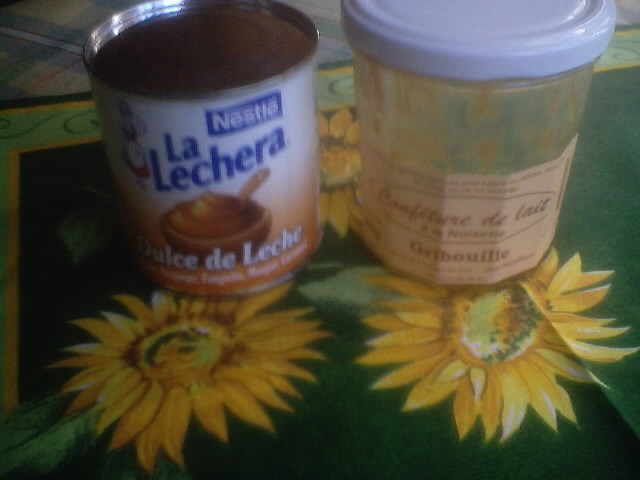
Dulce de Leche and (empty, sigh) Confiture de Lait Posted by Hello

Caramel-icious in Any Language!

The city of Honfleur, in France's Normandy region, is known for its picturesque charm. A fishing town, port and former shipbuilding center, its wooden buildings cluster around a sparkling basin in its center. Even the fascinating historic church is constructed of wood and resembles the upside-down hull of a ship.

As we followed our tour guide, Marina (in retrospect, I realized what an appropriate name she had for that location), through narrow streets, we peered into shop windows, anxious to catch glimpses of treasures soon to be unearthed. “As you stroll around on your own later, you may want to come back to this shop,” she said, eyes twinkling. “They sell milk jam here!”

The anticipated twitter of tourist voices greeted that remark. “Milk jam?” we chorused. Some of us, especially the lactose-inclined, purred, “mmmm, that sounds lovely.” Others, simply more skeptical, or perhaps less lactic by nature, wrinkled their sunburned noses and said “ewwwww” in response.

Marina assured us that this mysterious product, a specialty of the Normandy region, was a highly-cherished condiment in the area. Those same Norman cows that produced rich, flavorful milk for delectable cheeses also produced rich, flavorful milk for this jam. We were already deeply in love with the cheeses, so she knew that she had scored a hit with that description.

This Ingredient Sleuth, of course, was fascinated and looked forward anxiously to the designated shopping time later in the day’s “jam-packed” (I can hear you groaning!) agenda. The small shop, just as Marina had said, was filled with compelling items. A quick scan, upon entry, confirmed that a floor-to-ceiling shelf, at the back of the shop, contained the special item. CONFITURE DE LAIT – milk jam!

CONFITURE is the French word for “jam” and LAIT is the French word for “milk.” Yes, this was it. But then, another puzzle developed. Not only was there milk jam, there was milk jam of many descriptions – all in French, of course. The Ingredient Sleuth does speak a fair amount of French, so interpreting the contents of each variety was not a problem. The problem resided, rather, in that tastebud-wrenching decision of the single variety upon which to confer the honor of consuming valuable suitcase space!

Eyes scanned pretty glass jars, each with a large, descriptive label. And from each description, a different flavor beckoned: hazelnut (noisette), vanilla (vanille), apple (pomme), rum (rhum), orange (orange – sometimes language is kind!), cinnamon (cannelle) and many more. My forehead produced those furrows that so characteristically accompany culinary decision-making. Clearly, I was troubled.

“Bonjour, Madame. Do you speak English?” I turned to meet the friendly smile of a young man in his early twenties. He quickly explained that he was a customer, not a clerk, but that he noticed my interest in the milk jams and wanted to be sure that I found what I wanted. He reiterated Marina’s statements about local pride in this Norman specialty. He lived in Normandy and was eager to explain that milk jam is simply a cooking-reduced combination of milk and sugar, sometimes with additional flavoring ingredients, sometimes plain. The light bulb went off in my brain. Of course everyone loved this. Essentially, we were talking about milk-based caramel!

My selection, after much musing and several reconsiderations, was the hazelnut variety. The considerate young man seemed to favor that one and it was a pleasure to see his face light up when I made that choice. I could easily have caved in and bought others, undoubtedly, but just at that stage, the wide-ranging local-honeys display caught my eye and suitcase considerations prevailed!

The single jar of hazelnut milk jam accomplished its mission, though. I now adore milk jam and consider Normandy a region of exquisite culinary delights. The words that I had heard about Norman cows feeding on particularly-sweet, organic grasses, thus producing particularly-flavorful milk products, rang true.

Like many dessert and sweet items in France, confiture de lait is less highly-sweetened than similar North American treats. The full-bodied flavor of the milk itself seems to demand less sweetening. The milk jam’s consistency is firm enough to allow a teaspoon to stand upright in the jar but creamy enough to allow for creative dipping.

The list of contents is short and wonderful: whole milk, sugar and other natural flavors. Absent from the list are thickening agents, preservatives and coloring agents. The milk’s protein and calcium, as well as natural mineral salts, constitute the nutritional profile. Nutritious and delicious -- with a rich, golden color straight from nature's color palette!

People in Normandy typically eat milk jam as a topping for ice cream, pancakes, toasted bread, yogurt or even young cheese. I tried those, and they were all excellent. Throwing caution to the wind, I quickly progressed to the use of walnut halves, apple slices and pretzel sticks as dipping items. And then, of course, there WAS the day that the dark chocolate squares found their way to the milk jam jar …….. That was the day that the jar was emptied!

Milk jam cam be purchased throughout Normandy and, of course, in Paris (which wisely offers and employs the very best of ingredients from all of France's regions). After a fair number of perusals of U.S. markets and specialty stores, I have not yet found French-style, all-natural, milk jam available. Reluctant to turn to Internet sources on this ingredient (those jam-filled jars ARE quite heavy, as a shipping item), and not yet completely confident that I have found a good, equivalent recipe for milk jam, I have discovered one item that is similar.

Dulce de Leche (Spanish for candy of milk!) is a thick, caramel paste that can be found in the foreign-foods or baking-ingredients aisles of some supermarkets (particularly in areas which have significant Hispanic populations). The Spanish, like the French, knew a good thing when they created it and caramel, in any geography, is a winner.

This canned version of dulce de leche (the one pictured above is made in Chile) seems to be available only in the basic, caramel flavor. It is made with milk, sugar and agar (a seaweed-derived thickening agent) and contains preservative agents. Slightly thicker, and significantly sweeter than confiture de lait, this dulce de leche nevertheless satisfies those cravings for a convenient topping that will be similarly caramel-icious in any language!

Bon appetit – and buen apetito!

Friday, May 06, 2005


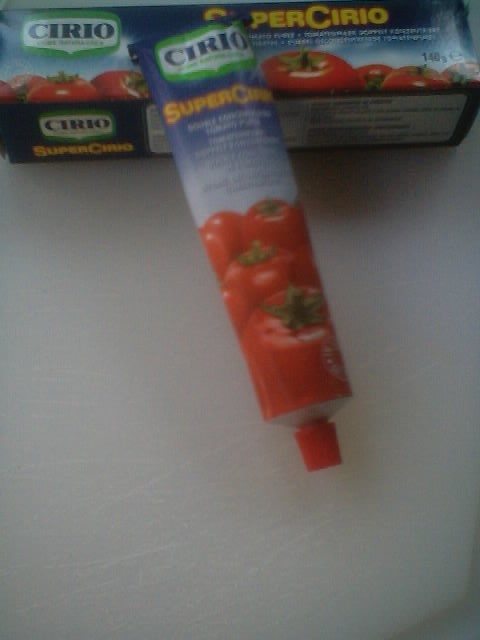
Squeezable Tomato Paste Posted by Hello

Paste Pitch -- No More!

The Boys of Summer are back and another baseball season gets underway. Stadiums fill with eager fans, hot dog vendors cook up the links and the scent of popcorn wafts through the air.

The pitcher winds up and delivers the first pitch of the game – a curve ball, high and inside. “Ball one!” The crowd murmurs its reaction to the umpire’s call through mouths brimming with dogs and corn. The second pitch is a slider – right over the plate, just within the strike zone. “Stee-rike!” Once again, the pitcher squints into the sunlight as he grasps the ball for the next pitch. It’s a fastball, perfectly positioned. “Stee-rike!” The crowd becomes quiet, as the impending out can be sensed.

Just one more strike is needed. The pitcher winds up and delivers the pitch, at lightning speed, straight into the garbage can at the far end of the home team’s dugout! An awed silence fills the stadium. The catcher reacts and reaches the garbage can just as the apple core dislodged by the hurtling pitch bounds into the air. By instinct, he reaches his gloved hand into the garbage container to retrieve the pitch. And out it comes … a bright, shiny can of tomato paste!

The crowd goes wild (I had to say it – this IS a baseball story, after all)! The pitching coach explodes from the dugout, grabs the cap from his head, throws it to the ground and sends the pitcher packing. There is just one pitch that is NEVER allowed on this coach’s pitching staff: the tomato paste pitch!

I can certainly relate to the pitching coach’s opinion – it is the stuff of ingredient sleuth dreams! Time after time, can after can, year after year, I have resignedly pitched moldy tomato paste into my garbage can, shaking my head in disbelief that I have let it happen yet again. Filled with good intentions, of course, I had earlier placed the remainder of the tiny can’s contents into a glass container and wedged it into my refrigerator.

Whatever recipe I was making at the time – meat loaf, pasta sauce, hearty soup, Spanish rice, sloppy Joes, barbecued ribs, chicken cacciatore, red curry, pizza, salsa, jambalaya, pork stew – it undoubtedly called for one or two tablespoons of tomato paste. Because tomato paste is made from five times its own weight of tomatoes, it doesn’t take much to provide intense flavor. But, that often means that half (or more) of the can remains after some delectable dish has been prepared.

In general, once opened, canned tomato paste will keep for up to seven days in the refrigerator. If one’s cooking is organized – or voluminous – enough, perhaps the entire contents of the can will be used within that weeklong window of opportunity. Somehow, that never seems to have been the case, for me. The well-intentioned second dish of the week somehow seemed not to materialize, no matter how clearly I visualized it when the tomato paste can was zipped open. And hence, the inevitable tomato paste pitch occurred, yet again.

Finally, I have found two solutions that have banished the tomato paste pitch from my life! First, the remaining paste’s usable life can be extended to about six months by freezing. Many experts recommend freezing tablespoon-sized servings in ice cube trays, then removing them after they are frozen and packaging them in airtight freezer bags. This is a very good solution, but I must confess that something about the thought of washing those ice cube trays always dissuades me a bit!

I prefer to retrieve the nifty little baking tray from my toaster oven, cover it with a shiny piece of plastic wrap or waxed paper, and then put the tomato paste spoonfuls several inches apart on the sheet – as if I was making tomato paste cookies! I slide that tray into the freezer, let the paste dabs freeze, then peel them off and put them into a good, heavy-duty freezer bag. The dabs wait happily in my freezer – and I don’t even have to remember to thaw them before using them in most dishes. .

Recently, I discovered my favorite solution to the paste pitch problem, bar none. No ice cube trays, no plastic wrap, no scraping of that last remaining bit out of the tiny little can. The Italians figured it out – they put tomato paste into a tube! What genius, what sensible thriftiness, what flavor, all contained there in that squeezable packaging. The tubed paste has a longer refrigerator-life than the canned paste (up to three weeks). Although, ounce for ounce, or in this case gram for gram, it is more expensive than the canned paste, I rarely pitch any tubed paste into the garbage can – a cost offset, for sure. Also, I have found the squeezable paste to be very handy for speedy hors d’oeuvres, encouraging me to enjoy its nutrition benefits on a much-more-frequent basis than before.

Recent food and health literature has documented very well the benefits of tomatoes – particularly the cooked variety. Like all tomatoes, they provide excellent doses of potassium, vitamin A and vitamin C. The cooking involved with heat-processed tomatoes releases lycopene, the strong antioxidant contained within the skin that has been credited with reducing the likelihood of several major diseases.

With all those nutrition benefits, as well as its deep, rich flavor going for it, tomato paste is just way too valuable to waste. Tomato paste in tubes can be found in some major supermarkets, at international markets, Italian groceries and online. Finally, just like the ballpark – in my kitchen, no more tomato-paste pitches are allowed!

Batter up – and bon appetit!

Friday, April 22, 2005


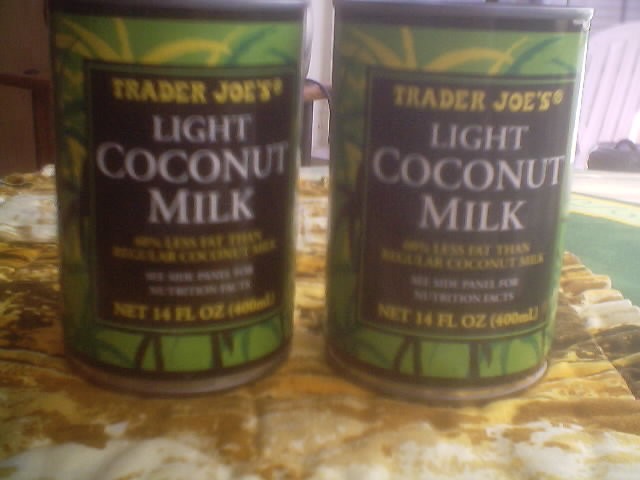
Canned Coconut Milk Posted by Hello

The Coconut Connection

Hammer, chisel, butcher’s knife, nut pick, empty jelly jar … all the required instruments were lined up on the kitchen counter, at eye level, to the wide-eyed amazement of an eight-year-old. No, we weren’t setting up for a scary, medieval-torture rite. We had just come home from the grocery store with an exotic purchase – a coconut!

We were about to begin the dissection. All that was missing was a surgical mask! Of course, at the age of eight, I was well aware of the tasty delights of coconut. I had watched Mom cut open a plastic bag of starkly-white coconut shreds many times, sometimes reaching in for small handfuls myself and carefully spreading them on the top of a freshly-frosted, homemade cake that she had whipped up earlier in the day.

But a whole, round, brown, hairy coconut – looking as if it had come straight from the tropics, or at least from the set of "Gilligan’s Island" – held visions of exotic adventure. I could almost see the monkeys that had brushed the sides of this coconut with agile little hands, as they played in swaying coconut-palm trees. The coconut itself, in fact, looked like a monkey’s head to me. There they were, the eyes and the oval-shaped mouth – all that was needed was a bonnet or a cap to complete the picture! (The Portuguese had recognized the similarity long before me; "coco" is their word for monkey. The Italians took a somewhat-more-cynical view and used the word "cocho" which means bogeyman!)

First step in the “grand opening” of the coconut, the pointy end of the nut pick was tapped into one of the dark-colored eyespots, with the help of a few firm strokes of the hammer. Several more such strategic openings in both eyes of the coconut, to allow air to interchange, encouraged the sweet liquid inside to start flowing. Time for the jelly jar! The clear, thin liquid appeared in steady drips, collecting in the bottom. This was our treat, shared in little sips, before proceeding to the rest of the “operation.”

Usually, our heavy (and oldest) butcher’s knife – the one that was already past the normal use stage -- was sufficient to pierce the side of the coconut, again with the help of a hammer-tap or two. Sometimes, with particularly thickheaded coconuts, the 6-inch chisel (from the kitchen utensils drawer, not the garage workbench), had to assist. (I have since read that a hammer tap alone will open the shell but I still revert to former methods!)

Soon though, in either case and with several more hammer taps, the coconut was lying open, with its sweet, white interior beautifully displayed in two halves. Back to the trusty knife, to chip the coconut into smaller pieces and then to carefully peel it (all this, of course, being done by the competent knife handler, not the 8-year-old). Child-sized hands were at-the-ready, though, anxious to grasp glistening white discs of coconut and deliver them (after a quick rinse) straight to equally-white, childhood teeth. I could almost feel south seas trade winds wash over me as the soft, smooth flavor twirled in my mouth.

It took many years, and many mouthfuls of coconut, for me to learn that coconut milk was not the liquid that I remembered from the jelly jar (that is actually coconut juice, sometimes called coconut water). Rather, coconut milk is obtained by processing coconut meat to produce a rich, milk-like liquid. Of course, one can prepare fresh coconut milk oneself (see http://www.coconut-connections.com/ for instructions, for recipes using coconut and for lots of info concerning the nutritional properties of coconut).

I, on the other hand, am completely content to use the canned versions of coconut milk that I find in regular supermarkets’ foreign-foods sections, at international markets and online. Coconut milk is also available in powdered and freshly-refrigerated formats, though I don’t find these as frequently and usually opt for the soup-sized cans. My supply waits faithfully in my kitchen cabinet – no muss, no fuss, and no hammer required for its retrieval!

Coconut milk is widely used in both sweet and savory dishes, particularly in Asian, Indian and Caribbean cooking. It pairs well with chicken, fish and seafood. A friend developed the recipe that follows. Inspired by the tremendous variety of dishes prepared on the TV Food Network (and I hope a little by the musings of the Ingredient Sleuth), he approaches cooking with increasing creativity. Several months ago, he described a chicken dish that he had invented, detailing step by step how the dish had been developed as he selected on-hand ingredients from the refrigerator and pantry.

The combination of ingredients sounded wonderful to me as well – particularly given that the linking element, allowing all the components to blend compatibly, was coconut milk. I cooked up a batch of this chicken (then more batches, as the addictive flavor called to me over time) and savored the complexity and contrasts it provided. The smoothness of the coconut milk is an excellent offset to the tanginess of many of the other ingredients in the dish. In fact, it provides the perfect Coconut Connection, through which the other ingredients express themselves to the taste buds.

Here, courtesy of Doctor Doug (university scientific-researcher and patent attorney) is a dish that is easy to make and good-to-the-last-drop tasty! I don’t think Doug has patented (make that copyrighted) his recipe yet, but I asked for – and received – his permission to publish it here anyway!


CILANTRO-LIME CHICKEN

1 pound of chicken breast, boneless, skinless, cut into four pieces

Marinate refrigerated, for 30 minutes, in:

Juice of 2 limes
1 cup chopped, fresh cilantro
2 tablespoons soy sauce
1/2 cup Sherry wine
1 tablespoon Dijon-style mustard
2 shakes Tabasco sauce (or to taste)
¼ teaspoon black pepper

Remove chicken from marinade and brown in oil in 10-inch skillet over medium-high heat, about 3 minutes per side. Add remaining marinade mixture to pan.

Reduce heat to medium and cook, covered, for about 10 minutes (turning chicken once while cooking), until there is no pink remaining in the chicken. Loosen good, brown bits from the bottom of the pan. Then add:

1 apple (Granny Smith or other baking apple), peeled, cored & cut into ¼ inch wedges
1 red bell pepper, cut into ¼ inch strips
¾ cup (about ½ can) coconut milk

Continue to cook, uncovered, until sauce is slightly thickened and chicken is fork-tender, about 10 to 15 minutes. Then add:

1 to 2 tablespoons brown sugar or honey, if desired, to preferred sweetness.
(4 servings)

Bon appetit!

Thursday, March 24, 2005


Rice Selection -- 99 Ranch Market Posted by Hello

Rice Makes the World Go 'Round!

The warm, sweet, nutty fragrance approaches the restaurant table, tickling our waiting noses, arriving ahead of the waiter. He smiles, carefully placing the steaming bowl of rice at the very center of the table. The accompanying meat and fish dishes assume secondary position, around the perimeter.

In your mind’s eye, you may be picturing a multi-course banquet from one of my Far East excursions. Of course, I have enjoyed many sublime meals in Asia and experienced eye-opening rice flavors there. But the dining venue that always springs to the front of my brain when I smell fragrant rice cooking in my own kitchen – and the setting of the wafting fragrance in this essay – is a small Thai restaurant in Regensburg, Germany! I don’t know if the restaurant is even there any longer (but I hope so), yet it has been the definition of fragrant rice to me ever since.

By some counts, there are 40,000 different varieties of rice. That seems as incomprehensible to me as it does you, by the way! Even the Ingredient Sleuth sometimes just shakes her head in amazement that borders on disbelief. There are, however, many remarkable varieties to be savored. Here are some of the kinds that I like to keep in my rice repertoire, from time to time:

Long Grain – kernels are 4 to 5 times longer than wide, light, fluffy; most-commonly served by Chinese restaurants

Medium Grain – kernels are shorter and wider than long grain, more likely to cling together than long grain

Short Grain – kernels are short, plump, almost round, very likely to cling together

Arborio -- kernels are large, creamy when cooked, release their starch during constant stirring with liquids to make Italian risotto; originally from the Po Valley in Italy

Basmati – kernels are long, thin, dry and separate when cooked; aromas similar to toasted nuts or popcorn; native to India and Pakistan, now also grown in the U.S.

Jasmine – kernels are long, thin, moist and clingy when cooked; aromas similar to toasted nuts or popcorn; native to Thailand. Now also grown in the U.S.

Brown – kernels may be any length, clingy, with nutty flavors and aromas; only the hull has been removed, leaving the bran layers in place (maintaining the high levels of minerals and B-complex vitamins) and retaining their brown color

Sweet (Glutinous) – kernels are short, plump, chalky white, opaque, extremely sticky; kernels lose their shape when cooked; used for desserts and sushi

Wild – not technically a rice, but a type of grass that has similar (water-based) growing conditions to rice

Grown and consumed worldwide, rice stands like a unifier of nations. I wonder how many people in the world would not recognize rice upon seeing it. Little wonder that it blends so well with foods of diverse ethnicity and that it unifies multitudes of ingredients in a single dish. Like a wise diplomat comfortable in any setting, it knows how to exist peacefully with its neighbors, adding just enough personality to keep things interesting.

A good assortment of rice has become available at many mainstream grocery stores. Often, supermarkets ‘file’ their specialty rice on the foreign-foods aisle (even though so much of it is now grown domestically) rather than the rice-beans aisle. International grocery stores, especially Asian markets, offer a huge variety. Large Asian grocery chains such as Mitsuwa Markets (http://www.mitsuwa.com/) and 99 Ranch Markets (http://www.99ranch.com/) carry many kinds and specialize in large-sack quantities. In addition, it seems that most college towns have at least one Asian market, many of them charming mom-and-pop operations with friendly and courteous owners; look under ‘Grocers & Markets – Retail’ in the phone listings. And there is always Internet shopping for rice of every description.

It’s fun to sample various types, starting small, with a one-pound bag, and then seeing where it takes you. I never expected to carry home five-, ten- or twenty-pound bags of rice from the grocery – but I do. Very cost-efficient and good for the strength training, too! And, very importantly to a globe-trotting ingredient sleuth, I could never have developed my chopstick ability without short-grain rice for home-based practice -- its clinginess somehow shortens the distance between the plate and the mouth! (Am I the only one who practices chopstick maneuvering at home?)

After all is said and done, love, not rice makes the world go ‘round, just as the song says. Hmmm, we do throw rice at weddings! There has to be a love-rice, world-spinning link there somewhere, doesn’t there?

Saturday, January 15, 2005


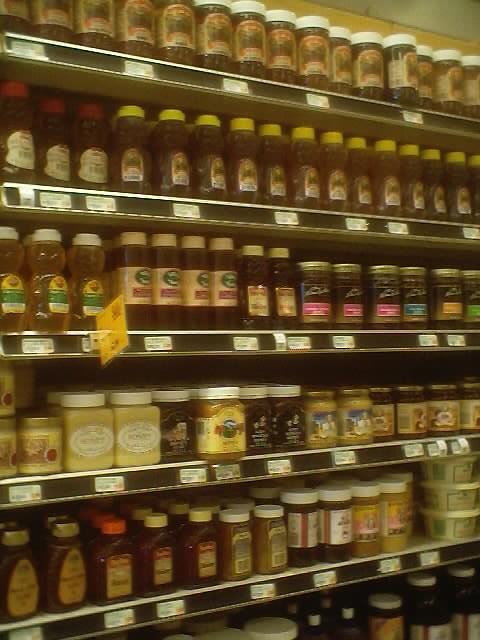
Honey Selection -- Whole Foods Market Posted by Hello

Honey, You're Not Too Sweet

It's a funny thing about honey. Its rich sweetness is almost visible, as it lazily drizzles, glistening, off of the spoon. Sometimes, it can taste almost too sweet. At least, that's how I have always felt about honey. As I have discovered, honey is not honey is not honey.

Even the little, plastic, squeezable honey-bear bottle is taking honey to a whole new level. In days gone by, that little honey bear served up one -- and only one -- kind of honey: sweet clover. Bringing to mind fields of fragrant purple or white clover blossoms, that sweet clover nomenclature for honey has always been idyllic. Can't you just picture a lazy afternoon in late summer, bees buzzing contentedly, far too busy with the fragrant clover to even consider zooming in for a friendly sting of any nearby humans?

Yet, the ultra-sweetness of clover honey has sometimes been a bit too much for me. Although a great fan of the Pooh Bear, I have not yet taken to eating honey straight out of the honey pot! Clover honey's sweetness sometimes seems to go overboard and masks the flavor of other, less-aggressive foods with which it is combined.

Today, that is not a problem. Even the little, squeezable honey-bear bottles now contain choices of honeys. Sage, lavender, eucalyptus and more -- the choice is simply amazing. My current honey of choice is sage. I can taste the pungent, earthy flavor of the sage on which those honey bees feasted. Within the honey itself, there is a lovely counterpoint component. Sweet honey sugar, lively sage directness.

As the holiday celebrations end, and I begin my recovery from the over-sugared territory of dread -- well no, actually I greatly enjoy sweet treats, but must maintain a bit of sanity in the process -- it is very pleasing to finish a meal with a somewhat-sweet, refreshing dessert. Plain yogurt, however rich or nonfat suits me at the time, becomes a lovely, satisfying dessert when topped with a small amount of sage honey. As a breakfast treat, it is equally tempting.

I discovered my sage honey at my local Whole Foods Market. As you can see from the photo above, the honey selection is awe-inspiring. Any day now, I expect to see the Pooh Bear there!

Wednesday, December 01, 2004


Andalucian Hillside with Olive Trees Posted by Hello

Andalucian Hillside with Olive Trees

Posted by HelloAndalucian Hillside with Olive Trees

This is the image that was browsing languidly through my brain as my tastebuds sent messages from yesterday's marinated mushrooms recipe. Suddenly, I was back in the Andalucian hills, learning about olive oils -- no airline ticket required.

Extra virgin olive oils are taken from the first pressing of fresh olives. To receive this designation, the oil must have less than one percent oleic acid. "First Cold Pressed" indicates that no heat was used in the crushing process, allowing the maximum amount of fresh, true scent and flavor to be retained.

Wonderful, fascinating olive oils are produced in many countries of the world. France, Italy and Spain jockey for positions of predominance. In any given year, one or the other country will produce the most, or export the most, or do something olive-oil-significant the most!

The tour guide in the Spanish olive oil mill was quick to point out that not all olive oil shipped from Italy is actually from olives grown and pressed in Italy. Only those labelled "Product of Italy" adhere to that requirement. A significant amount of olive oil that is marketed by Italian olive oil companies is actually Spanish oil that has been shipped to Italy for packaging and export. Based on my tasting of Spanish oils, this olive-oil globalization seems to be a fine thing indeed, for we consumers. All of these countries -- and others -- produce superb oils and provide an extraordinary ingredient base for our use.

Saturday, November 27, 2004

Striking Oil

You never know when "ingredient inspiration" will strike. Or what will trigger it.

One sunny day in southern California, I was contentedly reading Frances Mayes' wonderful and inspiring book Under the Tuscan Sun. As you probably already know, this book describes the series of discoveries that came her way as she undertook the purchase and renovation of a home in the hills near Cortona, Italy. As I read the true story that sunny day, and each time that I have re-read it, I too was surrounded with a feeling of discovery. For, like all true cooks, Ms. Mayes found that the joy of her new location often focused on the gathering and preparing of wonderful new foods. Her descriptions of the experience would send even the most jaded taste buds into overdrive!

As I read her description about her first year's harvest of olives, the crushing of them and the bottling of her own, homegrown extra virgin olive oil, my inspiration began to take hold. Olive oil, it was becoming clear, had a unique personality, just like wine. Growing conditions, weather conditions during harvest and crushing method are all strong influences on the character of the oil. And each proud grower, whether harvesting a private crop of olives or producing a mega-crop for retail distribution, awaits with great anticipation and trepidation the verdict on the quality of the year's efforts.

Ms. Mayes described a Cortona festival, at which nine different oils -- from nine different growers -- were tasted as an afternoon's event. All were available, with bread for accompaniment, in the town's Piazza. She described how she and her husband were awestruck by the entire concept of the event. And then, in lovely detail, her words turned poetic and linked the flavor components of the oils, when tasted, to the area's hot winds of summer, first rains of autumn, sunlight on leaves. I couldn't wait to turn my attention to searching out new olive oils on my own, settling down to taste them and letting the wonderful essences work poetic wonders on my own palette!

My first selections, for my own private tasting festival, have now faded into memory. But, the astonishing realization of their differences in flavor has influenced my cooking ever since that day. I no longer trudge to my cupboard, haul out "the" (one and only) bottle of olive oil waiting there and perfunctorily splash a bit of it into a pan before cooking. No, not since my own personal "striking oil" inspiration. Now, olive oil is an integral element of my cooking. It is used to enhance and develop the flavors of a dish, to add just the right touch of spicy bite or the combining element of smooth richness that is needed to draw together the other ingredients in a dish.

As is so often true in cooking, the simple, straightforward uses of wonderful ingredients are often the best. This thought races through my mind each time that I take a piece of bread, dribble on some rich, flavorful olive oil and rub a freshly-halved clove of garlic over the oiled bread. Food of the gods, with a little help from serious olive growers all over the world!