Showing posts with label Books and Instruction. Show all posts

Tuesday, February 08, 2011

Does Bread Make You Say "Ouch"?


I love bread. It seems to touch, and satisfy, my very being. Like many people, I've tried my hand at baking it. I've enjoyed using an automatic bread machine -- I'm not a bread snob. I've relished, even when flour-dusted from head to toe with muscles screaming from kneading, baking bread from scratch. I've made the well-known New York Times-published no-knead bread recipe -- it works, see the photo above.

But many people are not so fortunate. Gluten sets their bodies to reeling. We see an increasing number of gluten-free products in the grocery stores. And some of them are better than others, not only in taste, but in ingredient content and preparation. I suspect that often, these gluten-free products are the result of necessity leading to invention. Nothing inspires one quite so much as finding a solution for the health problem of a loved one.

And that is exactly the case in the development of a range of new gluten-free products by a company called Gluten Free Treasures. Based in Menasha, Wisconsin, this young company is moving forward quickly in meeting the gluten-free needs of its community. And with the power of the Internet (with customer testimony on Facebook and Twitter) and nationwide shipping, the mail-order needs of an expanding customer base.

These products, from bread and rolls to muffins and cakes and cookies, go a long way in taking the "ouch" out for people who, like me, love their baked goods. Bravo!

And for simple fun related to breadmaking, and to help you lose your fear of flour, check out the recent book by William Alexander titled "52 Loaves: one man's relentless pursuit of truth, meaning and the perfect crust." It's a great memoir about one man's attempt to create the perfect loaf, in his spare time. When that man is highly-creative, a bit compulsive, slightly devil-may-care and a gifted storyteller, the fun can't be far behind!

*****
Update, May 2016

Unfortunately, as is the case with  so many small, start-up businesses, Gluten Free Treasure in Wisconsin no longer exists.  But, as I am sure you all know, the gluten-free movement has taken off in a big way and there are many alternatives available today.  For those who need this alternative, what a great development!

Sunday, April 05, 2009

On Rue Tatin


I have written about Susan Hermann Loomis, her cookbooks and her cooking classes in Normandy before. But sometimes, a picture is worth a thousand words -- especially if the picture is of the moving variety and in spite of the words being in French. To soak up some of the atmosphere, have a look at this video. If you're like me, you'll be dreaming of French markets and cooking classes in no time!

Sunday, March 29, 2009

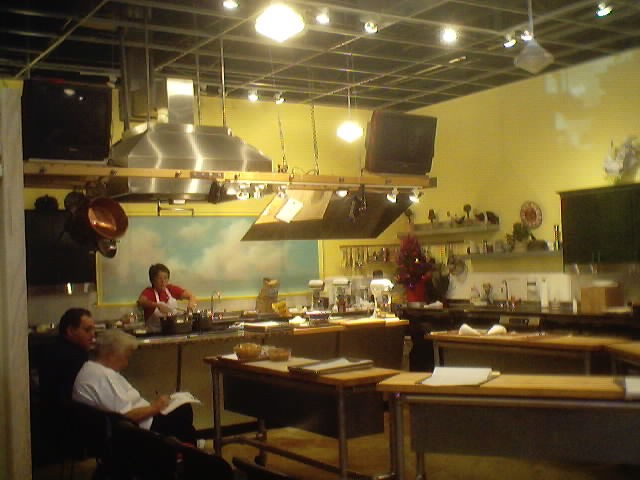
Cooking Class in Newport Beach


Do you have your chef's hat with you? I hope so, because it's almost time for the cooking class to begin. And if you're like me, everything you cook always turns out better if you wear your lucky hat!

We are at the Sur La Table housewares and cooking supplies store in Newport Beach. This shop is a veritable playground for those of us who love to cook. Frankly, even those who simply love to eat could probably find lots of inspiration within these walls.

Frequently, cooking classes are conducted in this separate area, just to the side of the display floor. These classes are often presented by individuals who have published cookbooks, by people who are chefs at restaurants in the area, by culinary instructors from near and far. Even if you don't attend a class, you can participate in the fun vicariously by browsing the store while the aromas waft nearby.

Let's go -- I see some gorgeous shrimp being taken out of the refrigerator now!

Friday, September 08, 2006

Speaking for Monet


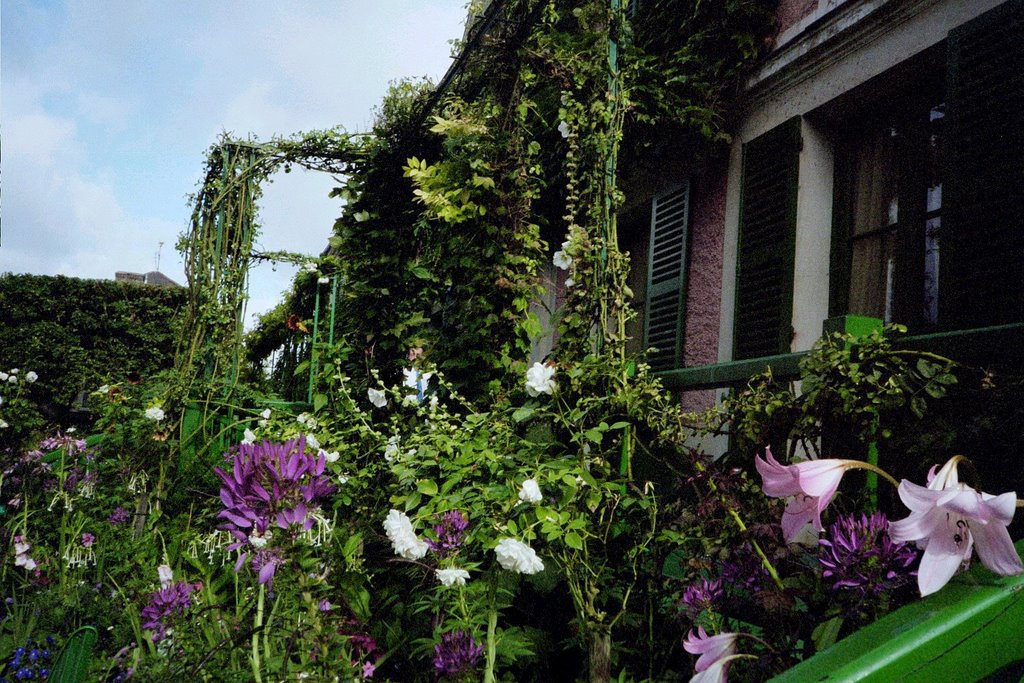
Monet House, Exterior, Giverny, France


"I paint because there are flowers in the world." These are the paraphrased words of Claude Monet, renowned artist and superstar of the Impressionist Movement of painting. His famous works are displayed in all of their splendor at Paris' Orsay, Marmottan and Orangerie museums. To see a LOT of Monet's works in one place, those are the places to go.

If not in Paris, we can savor the beauty of one, or a few, of his paintings in virtually any large museum in the world. His legacy of art speaks for itself, worldwide.

In addition, the house and gardens that provided the environment for so much of his work are today a sort of Monet museum unto themselves. The vibrant colors throughout the house and garden beckon to current-day visitors in the same way that they spoke to Monet over 100 years ago.


Recently, I discovered a book that took me back, on a virtual visit, to the Monet house and gardens in Giverny, France. Color photographs leap from pages, splashing vivid memories of gardens, dining room and kitchen onto my reminiscing mind's eye!

How stunning, to be in Giverny, a short ride from Paris, in Monet's Garden. It is a place that draws you in and helps you to FEEL those words of Monet's about flowers. In the shimmering light, always so intriguing to the artist, the landscape still seems to be calling out to be painted.

MONET'S TABLE, by Claire Joyes, Simon and Schuster Publishers, 1989,takes us to yet another dimension of Monet's world. He appreciated cooking -- loved it, in fact, enough to create his own collection of cherished recipes by persuading his family and friends to commit them to paper. The recipes, like Monet's interests, reflect international dishes and ingredients. Just as so many of us do today, he returned from international trips with a headful of favorite food memories -- and often, a handful of recipes.

Recipes from A to Z, from appetizer to dessert, have been selected by Monet's descendants from his collection and compiled by Claire Joyes, the wife of his great-grandson, in this delightful book. Imagine the aromas of these dishes, wafting through the rooms of the charming house in Giverny. Visualize steaming plates being carried to the dining room table, set in its tones of yellow and blue, harmonizing beautifully with the chrome-yellow walls, creamy-yellow chairs and blue-toned Japanese-art-prints decor of the dining room.

All of that imagining is facilitated, of course, by the multitude of photographs of garden, house, foods and handwritten recipes in the book. Fortunately for we cooks, the recipes have all been translated into English, converted into American weights-and-measures by well-known French chef Joel Robuchon, and faithfully word-processed so that we won't have to struggle to read the rather artistic handwriting of the original collection (even if we could read French!). How delightful, though, to be able to see an original, yellowed, recipe page from the master artist's kitchen.

Bringing to mind, once again, how much charm -- how much of the real person -- is brought to bear by the handwritten word. Somehow, it's hard to imagine future generations looking at a USB memory stick of great grandmother's recipes and exclaiming, "Oh, can't you just SEE her at the stove?" (Yes, I CAN hear you saying, "Put a photo of grandma on the memory stick with the recipes!")

Monet lived to a ripe age and spent most of his years surrounded by an extensive family and many friends. The weekend meals in Giverny, especially in the summer, included many art, government and literary friends from Paris and abroad.

At that time, Monet spoke to the world in his art, through his gardens and by means of his devotion to shared food. By means of all three of those elements, that legacy continues. Today, as then, his art, Giverny gardens and recipes all speak for Monet.

Saturday, August 12, 2006

Peaches and Herb - Revisited


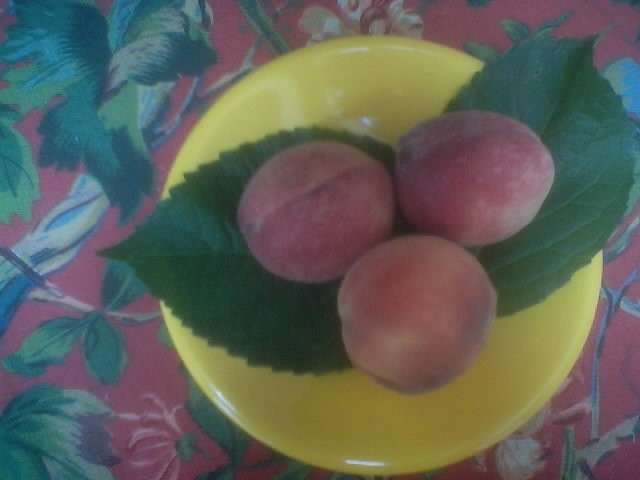
White, Freestone Peaches


Trivia Question:

What pop group from the 1960's and 70's earned the nickname "Sweathearts of Soul" with hits like "Let's Fall in Love" and "Close Your Eyes"?

(No guesses? Or are you one of those clever people who knew the answer right away?)

Here's a Hint:


The answer is food-related! And no, it's not the Beatles -- even as gregarious an eater as the Ingredient Sleuth hasn't termed beetles (and it's spelled with an 'e' rather than an 'a' anyway) a food just yet!

(Give up?)

The Answer:


Peaches & Herb!


If you've finished groaning, after that introduction, we can proceed to the topic at hand -- peaches! Here we are, well into the depth of summer (ask anyone in the hot zone that seems to exist everywhere in the Northern Hemisphere this year), and peaches are available in all of their juicy abundance.

Originating in China, then migrating along the ancient Silk Road to Persia and the Mediterranean by 2000 B.C., the pretty, pink blossoms of peach trees now grace fields and back yards worldwide. Where blossoms glow, peaches grow!

As modern cultivars, peaches are typically classified as either "cling" or "freestone" based on the characteristics of the peach flesh surrounding the stone. In cling peaches, the flesh clings to the ridgy-surfaced stone; in freestone peaches, the flesh pulls away cleanly from the stone.

Many say that cling peaches are sold primarily for commercial canning purposes, and, as a result, do not appear routinely on grocers' shelves as fresh fruit. I find that NOT to be true, however.

Many times, after making a nice, slick cut around the circumference of the peach, then doing that opposite-direction turn of the two halves, I grimace as I discover that the peach is as tightly attached to the stone as before I made the cut! A Cling Peach! I then proceed with more cuts, wedging off thin slices of peach, one by one. Still just as delectable, albeit a bit more drippy -- and best not tried if the consumer is wearing long sleeves -- the peach slices eventually find their way to mouth or serving dish.

Freestone peaches are simpler and much better for lunch boxes, picnics, and virtually all applications, in my way of viewing the world (in which I prefer dry wrists to peach-juice wrists!). The flesh of the peach slips easily away from the stone and is ready for use without delay.

The flesh of the peach, in both cases, may be either yellow or white. Those with a true sweet tooth will likely prefer the white-fleshed varieties; the yellow varieties typically provide an extra little acidic tang.

Both yellow- and white-fleshed peaches often have red on their skin. As a result, peach identification, at the market, is best accomplished by faithful reading of the grocer's signage -- and perhaps of those pesky little glued-on stickers.

Today's recipe makes splendid use of freestone peach halves. From the recent cookbook by Jerry Traunfeld (HERBAL KITCHEN: Cooking with Fragrance and Flavor, William Morrow/Harper Collins Publishers, 2005), the recipe develops the flavors of the peaches by roasting and enhances them with the zing of herbs, nuts and sugars.


Roasted Peaches filled with Almond and Tarragon
(8 servings)

6 tablespoons unsalted butter, softened
¼ cup sugar
¼ cup dark brown sugar, packed
1 large egg
¼ cup plus 2 tablespoons all-purpose flour
1 tablespoon coarsely chopped tarragon
¾ cup sliced almonds
4 large ripe freestone peaches

Preheat the over to 400 degrees Fahrenheit. Beat together the butter and both sugars in a mixing bowl with a wooden spoon, or in an electric mixer, until there are no lumps. Beat in the egg and then the flour. Stir in the tarragon and almonds.

Split the peaches in half and remove the pits. Arrange the peaches cut side up in a shallow baking dish just large enough to hold them. Divide the almond filling into 8 equal portions and mound each in the cavity of a peach half. Bake for 30 to 40 minutes, or until the filling spreads over the top of the peaches and becomes well browned and crisp. Cool the peaches slightly. Serve them warm in shallow bowls with whipped cream or vanilla ice cream.

Herbal improvisations: In place of the tarragon, add ¼ cup chopped anise hyssop leaves. Fresh green fennel seed is also good in this dessert; use 2 teaspoons chopped soft seed.

** NOTE: This recipe was authorized for reprint by the Ingredient Sleuth with the express permission of the author, Jerry Traunfeld, and the publisher.

The pleasing blend of flavors in this dish seems to me to be in complete harmony with the concepts of yin and yang of peaches' native China! The balance of all the flavor components is simply grand. And the caramel-crisp nut/herb topping is eye-rollingly luscious!

Eating these peaches while they are still warm is heavenly. Oozing-sweet peach juice, melted butter-caramel, roasted-rich nuts and bright, slightly-licorice fennel -- flavor explosions, texture contrasts. A dish that made my mouth water WHILE I was eating it! Every bite called for another.

The HERBAL KITCHEN cookbook is grand, as well. Mr. Traunfeld grasps the concept of HOW we gardeners -- especially herb gardeners -- cook! He knows that we eyeball our herb beds/containers/windowsills and think, "Hmmm, I have a lot of lovely tarragon right now. I wonder how I should use it."

Then, we pull down a cookbook from a shelf and start browsing. In the HERBAL KITCHEN, not only do we find recipes, sweet and savory, that make wonderful use of herbs but also a quick, ready reference for answers to our herbal cultivation questions.

What herb gardener, somewhere along the way, hasn't asked himself, "I need to harvest some of that oregano. Now, do I cut it WAY back, or only halfway down the stem." Most of the time, I find answers to such gardening questions much more easily in the HERBAL KITCHEN than in a gardening book. This is not surprising, I think, simply because Mr. Traunfeld is a chef. He knows what we "cookers" are thinking!

As the head chef at The Herbfarm Restaurant (http://www.herbfarm.com/) in Woodinville, Washington, for over 15 years, Jerry Traunfeld creates herb-inspired Northwest menus each week. He has received the James Beard Award for Best American Chef in the Northwest and Hawaii.

Was it a favorite song from Peaches & Herb that inspired this delectable dish? Likely not, though every time you prepare Roasted Peaches filled with Almond and Tarragon, you may find yourself humming "Let's Fall in Love" -- mentally adding, "With peaches and herbs!"

Saturday, April 15, 2006

A Hard-Boiled (Egg) Story


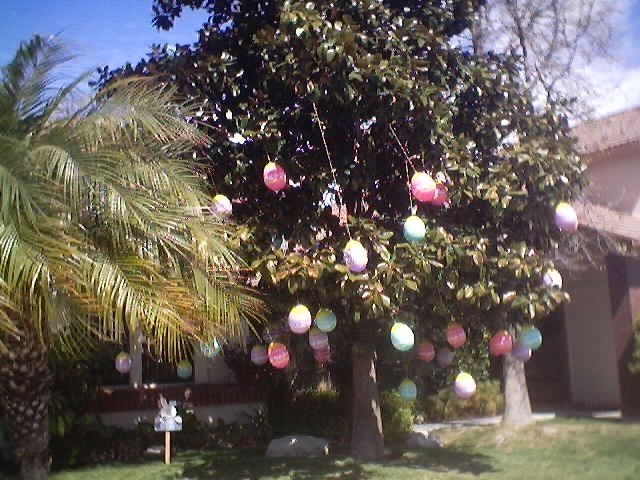
In my neighborhood, eggs seem to grow on trees! Giant, colorful eggs sprout once a year, in springtime, at just one house on the block. I’ve always wondered what the homeowners DO with all those eggs? And just how tall IS that Easter Bunny, to be able to attach the eggs to such a big tree? And, which DID come first, the tree – or the eggs?

Without delving deeper into this little piece of fiction, or into the infamous and unanswerable chicken-or-egg-first question, let’s just enjoy eggs for what they are and focus for a moment on this week’s favorite: the hard-boiled Easter egg. Whether delivered by the Easter bunny in baskets or buckets or on trees, these tasty hard-cooked, versatile eggs can be eaten from breakfast to dinner and all times in between.

Many different variations of cooking method have been promoted, from time to time. The most-common method simply involves placing eggs into a saucepan wide enough to allow them to sit in one layer without crowding, deep enough to allow one inch of water to cover the top of the eggs and a couple of inches more space to allow for boiling froth.

Over high heat, bring the eggs and water just to a full boil. Then, remove the pan from the heat immediately and cover with a tight-fitting lid. Let the eggs stand in the pan, covered for 15 minutes. Then, pour off the hot water and run cold water over the eggs to stop them from cooking and to make peeling easier.

Shelling hard-cooked eggs is also made easier by using eggs that are at least several days old, gently tapping the entire surface of the shell against a flat surface and peeling from the large end. Some people like to peel eggs under running water to further assist in the shell-removal process.

The following delicious recipe using hard-boiled eggs comes from the LIDIA’S FAMILY TABLE cookbook (Alfred A. Knopf Publishers, New York, 2004), by Lidia Matticchio Bastianich with David Nussbaum. Techniques and recipes from this book are also featured in Ms. Bastianich’s syndicated PBS-TV series.

Both the TV show and the cookbook allow aspiring Italian cooks to spend some virtual time in Lidia’s kitchen and learn the techniques that she uses – the ideas and methods that were passed to her through her family and that she has developed for use in her highly-popular restaurants in New York City, Pittsburgh and Kansas City.

Starting from the basics, Ms. Bastianich describes beloved Italian everyday favorites and then progresses to tried-and-true variations, improvisations and cook-to-cook tips – just as she would if standing next to a cooking enthusiast in her own kitchen. As she so often says on her TV show, she doesn’t want people to be a slave to the recipes but just to get ideas to use in their own cooking. A devoted author and nationwide lecturer, she also provides lots of information and ideas at her website: http://www.lidiasitaly.com/.

So, let’s gather up those hard-cooked Easter eggs and get started!

CAULIFLOWER AND EGG SALAD
(Serves 6 or more)

1 large head cauliflower (1-1/2 to 2 pounds)
½ teaspoon or more salt
3 hard-boiled eggs
3 tablespoons or more white wine vinegar
¼ cup or more extra-virgin olive oil
Freshly ground pepper to taste

Tear off all the outer leaves attached to the base of the cauliflower; reserve any tender green leaves. Cut out the bottom core, and snap or slice off all the big florets from the inner stem. Cut the florets into 1-inch chunks or thick slices (don’t break them up into tiny florets).

Bring 3 or 4 quarts of water in a large pot to the boil, drop in the florets and reserved leaves, and cook, uncovered, at a steady boil for 5 minutes, or until cooked through but not soft. Lift out the cauliflower, spread the pieces out in a colander, and sprinkle with ¼ teaspoon of the salt. Cool to room temperature.

Before serving, slice the eggs in wedges, and cut the wedges into 2 or 3 pieces each. In the bottom of a large mixing bowl, whisk together the vinegar, oil, another ¼ teaspoon salt, and grinds of pepper. Put all the cauliflower in the bowl, and tumble to dress all the pieces. Scatter the egg pieces over the top, and fold them in. Taste, and adjust the seasonings.

Arrange the salad on a serving platter, or portion on salad plates.

*Copyright Note*: Lidia Bastianich specifically authorized this recipe reprint, by the Ingredient Sleuth, in this posting.

The additional notes to the recipe indicate that this dish is good as a first course, a side dish or a partner with broccoli for a supper dish. As Lidia says, “At my grandma’s house, we used to have this kind of salad many a time, with a slice of homemade bread and some good cheese, for supper.”

The LIDIA'S FAMILY TABLE cookbook is filled with photos -- of beautiful food and of four generations of Lidia’s family-- showing the ways in which food serves as an integral part of the family's routine, creating an ongoing interaction among all generations. For the Ingredient Sleuth, those photos and the explanations never fail to bring a smile. Somehow, Ms. Bastianich has managed to capture, in book format, those person-to-person encounters that magnify all good cooking and good food.

As the Easter baskets are gathered and the pyramid of colorful eggs is placed lovingly in that bowl in the refrigerator, I hope that today’s recipe comes in handy. Enhanced by the addition of just a few additional ingredients, those eggs of the hard-boiled variety will be ready to be gobbled up by eager salad eaters in no time!

Happy Easter, buon appetito -- and as Lidia says at the close of every TV show, "tutti a tavola a mangiare!" (All to the table to eat!)

Friday, October 28, 2005

A Cookbook Gem

Family Favorites in Print

“This roast duck is really good, Grandma. Will you tell me how to make it so crispy?” Visions of future duck feasts evaporated quickly after the holiday meal at Grandma’s house. As usual, thoughts and conversations had turned to a dozen different things after the table was cleared. The requested “duck instruction” was forgotten. Maybe next Christmas they’d remember.

“Nobody makes strawberry shortcake like you do, Mom! How do you keep the shortcakes so nice and moist?” The same words were spoken, time after time, as the family returned home from distant places for summertime reunions. “You can help me next time and make some notes,” Mom said. And the plan was set – maybe even implemented – to record Mom’s shortcake expertise for posterity. Or was it forgotten, set aside, deferred for “another time” that never came?


A recent browse through one of my favorite bookstores confirmed that some people DO, in fact, follow through on plans to commit favorite family recipes to print. The bookstore that produced this little gem of a cookbook is the used-book store at my neighborhood library.

The Friends of the Library organization, composed of volunteers with more than the usual amount of love for books, accepts donations of used (and new) books, sorts them, classifies them, shelves them in whatever space the library can make available, mans the sales desk and contributes all of the proceeds to the library.

As you can imagine, the stock is constantly changing and timing of one’s expeditions to the store is critical. Everything depends on who has donated what – and when! The Ingredient Sleuth’s bookshelves slump at the thought of missed opportunities – and under the weight of the opportunities seized!

But now, let’s get back to the little gem of a book that I found and brought home with me. CHINESE HOME COOKING, by Mina C. Yu, shows no date of publication. As the photo above shows, it is a small book, hardcovered, in format. It has only 104 pages and was printed by the First National Printing Company, Ltd. in Hong Kong.

No publication date is given. A quick check of Amazon indicated one used copy available, as a "rare find" and the publication date was listed as 1955. Of course, even before checking the Web, I knew that the publication had to be prior to December, 1959 – a handwritten greeting, in blue ink, on the first page reads as follows:

“December 1959

Dear Mrs. Lee,

With my warmest regards and best wishes.

Fely Go”


This personal greeting, from one friend to another, exemplifies the charm – and hint of mystery -- that accompanies the purchase of a used book. Were Mrs. Lee and Fely Go relatives or friends? Probably they were not relatives, because of the formal means of address. Perhaps Mrs. Lee was a teacher and Fely was her student? Or Mrs. Lee was a beloved neighbor? Sleuths wonder about such things!

Half-a-dozen color photographs of completed dishes are spaced throughout the book. Each looks as if it is a “snapshot” taken at a dinner table, filling only a portion of the page (with blank space consuming the balance of each page) and having the aspect ratio of a home photo. I am immediately reminded of my own photographic efforts to get a photo “just so” to post on the Ingredient Sleuth blog!

The introduction to the book is written by Felicia Roxas Tanco, who describes herself as a friend of the author. She testifies to the delicious-ness of Ms. Yu’s cooking and the popularity of her dinner parties in Manila, the Philippines.

The recipes in the book are Ms. Yu’s interpretations of a variety of Chinese classic dishes and represent various regions of China. They are basic, home-style versions of dishes that Ms. Yu took the time to write down. They use basic ingredients – and a limited number of them – just as all, good, home-style dishes do.

Ms. Yu says, in the preface, that her friends encouraged her to commit her cooking expertise to writing. She did just that – and dedicated the book to those friends. Probably, this charming little book is self-published. The last page of the book has a printed, pasted-in card with spelling corrections referenced by page and line number – a delightful touch.

I feel fortunate to have discovered this copy. I wonder, at the same time, how many were printed. Perhaps it was a very short printing run, with the distribution meant solely as a remembrance for good friends. I feel as if I am part of the group gathered ‘round Mina Yu’s dining table. I can almost hear someone say, “Mina, you should write down how you make all these wonderful dishes!”

The Ingredient Sleuth, for one, is grateful that she did!

.

Friday, September 09, 2005

Space-Saving (Flat) Bread!


Flatbread selection at Jordan Market in Laguna Hills


Flatbreads of every description always seem to me to be space-saving bread. Or should that be "bread in space"? It makes me wonder if the astronauts ever take this kind of bread along when every tiny bit of space savings is crucial in the tiny cabin of their space vehicle. Maybe an extra square or two, for snacking, folded up in a tiny pocket of that space suit?

Certainly flatbreads are a good idea for backpackers or campers. After all, you wouldn't have to worry about any little slips or stumbles on the trail -- at least crush-wise -- if your bread is flat to begin with! Though, I suppose it wouldn't cushion one's fall quite as well as a puffy variety ....

And another question always come to mind about flatbreads. If they take up less space outside my stomach, do they take up less space INSIDE my stomach as well? I suppose chewing sort of equals things out, space-wise?

If bread is the "staff of life," flatbreads must be the handle! They have been around, nourishing people around the world -- especially nomadic people -- forever!

Some estimates suggest that as long as 15,000 years ago -- that would be 13,000 B.C.! -- wheat grain meal and water were mixed together and baked on heated rocks, thus creating the first flatbreads. Then, more "recently," say 2600 to 4000 B.C. (estimates vary over that 1400-year range, but of course, recordkeeping probably was not all THAT precise during that period!), the Egyptians added yeast-like substances to make bread rise, either a lot or a little, and created the first ovens for baking bread. Most of these breads would still be considered flatbreads, even though they contained small amounts of leavening agent.

The Greeks learned from the Egyptians and then passed on the knowledge to the Romans. And of course, those on-the-move Romans not only took it from there and grew better grains, improved the milling processes with finer sieves and built better ovens, but then transported the know-how all over Europe (undoubtedly carrying space-saving flatbreads with them!) as they conquered not only bread-making but everything else they could get their hands on! By 100 A.D., most of Europe had adopted Roman bread-baking techniques.

The beauty of the whole history of bread, to the Ingredient Sleuth, is the overwhelming variety of bread styles that we have come to enjoy: various grains, various baking styles, various densities, various form factors. A trip around the world, or around a well-stocked supermarket, provides bread choices of many descriptions.

For this week, let's consider only flatbreads -- at least, a FEW of them! As in all bread categories, the variety is inspiring.

TORTILLAS, round and unleavened, are Latin American flatbreads. They may be made from ground corn, masa (corn kernels cooked with unslaked lime and water) or wheat flours. Corn tortillas typically contain only masa and water. Flour tortillas usually include baking powder, salt, shortening and milk. In both cases, tortillas are cooked on an ungreased griddle. The Ingredient Sleuth will never forget the delectable flour tortillas, hot and fresh from the griddle, of Guadalajara , Mexico -- there's just SOMETHING about the flavor of real lard (rather than the vegetable shortenings predominant north of the border) in those little beauties! Supermarket tortillas, have also begun to feature added ingredients, such as avocado and sundried tomato flavors.

PITA BREAD, one of the oldest recipes known to mankind, is round, Arabic flatbread whose basic ingredients are flour, water, salt, sugar and yeast or starter. Sometimes, butter, shortening or dry milk are added. Because pita bread is baked at a very high temperature (500 degrees Fahrenheit), it forms a pocket shape. The dry exterior skin of the dough sets and carbon dioxide from the yeast and steam from the moist ingredients expand until the upper and lower layers separate. Pita bread spread to Italy from its Arabic locations of origin. And voila! Northern Italians topped it (rather than filled it) creating what they pronounced as "pizza!" (Isn't it a small world, after all?)

NAAN BREAD, the famous flatbread from India, is slightly leavened and formed into a roughly-oval shape. Made from white flour, it is sprinkled with pungent nigella seeds and baked at high heat in either a tandoor or regular oven. The picturesque -- dare I say romantic --part of the tandoor (clay) oven, I think, is the idea of slapping those flattened, oval dough disks onto the hot, interior walls. Of course, singed finger tips probably aren't so picturesque or romantic, for the bakers! Today, naan bread is a common restaurant item (sometimes in its garlic-flavored form) and is rarely baked at home, even in India.

LAVASH is Armenian flatbread. It is formed in various shapes and sizes and in textures from soft to crisp. It is unleavend and extremely flat -- sometimes paper-thin. This bread, a staple food not only in Armenia but in parts of neighboring Iran, Lebanon and Georgia, has been prepared the same way for thousands of years: long sheets of dough are stretched thin and baked in a clay oven similar to an Indian tandoor oven. Sheets of lavash, even as packaged in plastic in supermarkets, are large -- about 12 inches by 18 inches. The Ingredient Sleuth always winces when the checkout clerk nonchalantly folds the package in half in order to fit it into the shopping bag -- but the lavash has never broken and always arrives home safely.

These flatbreads (and others!) appear in ethnic markets, international markets, specialty food shops and, increasingly, in supermarkets as well. They are usually reasonably-priced, provide an interesting alternative to other workaday breads and won't take up much room in the shopping cart or in the pantry!

Whatever their shape, flatbreads of all descriptions are just the ticket for wrapping up tasty fillings, scooping up sauces and stews, dunking into dips, or (a personal favorite) slathering with honeys and jams and that wonderful chocolate-hazelnut spread Nutella. When it comes to flatbreads, everything old (and space-saving) is new again. You don't even have to be nomadic to enjoy them!

Bon appetit!

Friday, June 03, 2005

Lavender: A Magic Carpet of Scent & Flavor

The tiny, red ladybug's wings were a blur! There she (or he!) was, in the middle of an immense field of heavenly bliss. As far as a ladybug's eyes -- even as far as a giant's eyes -- could see, the sun reflected lushly from the deep, thick, purple carpet. The fragrance filled the air as each movement of the ladybug's delicate wings created invisible air currents to heighten the aroma. Purple visions of olfactory delight! Lavender fields of summer.

Purple, dark or light, is a color that is associated with power, with riches, with life’s good things. Little wonder then that lavender, as an aromatic herb plant, is so popular. With that gorgeous color going for it, lavender was bound to attract human attention, right from the start! One would just naturally be drawn to its beautiful color – like a ladybug to color or a hummingbird to nectar. Once focused on the plant, one would just as naturally stay right there with it, in aromatic heaven.

A member of the mint family, lavender is a perennial that returns to our gardens, year after year, to delight us. English lavender (Lavandula augustifolia) is probably the variety that we see most often. The two most-common cultivars – should you be inclined to head straight out to your local nursery, now that planting season is here – are Hidcote (a deep violet color) and Munstead (a pale “lavender” color!). Additional English lavender cultivar varieties include Twickle Purple (taller), Gary Lady (silver foliage) and Jean Davis (pink blossoms).

A different lavender variety, more-typically grown for commercial oil production purposes, is called lavandin. French lavender and Spanish lavender are not as sweet, having instead a somewhat medicinal fragrance, which is not as appropriate for cooking.

English lavenders are the best bet for culinary uses. That’s right, I said “culinary uses and cooking!” Most of us have probably been eating lavender for a long time without knowing it. It is routinely used as one of the herbs in the popular Herbs of Provence seasoning blend. Today, more and more recipes feature lavender as an ingredient in its own right!

Flowers and buds, leaves and stems, all have the characteristic aroma and flavor of lavender. For culinary use, the flowers and buds, fresh and dried, are best. Surprisingly, and unlike many other herbs, the fresh flowers are stronger than the dried. Fresh lavender’s taste is fruitier and sweeter; dried lavender has a more-pronounced herbal character, somewhat reminiscent of thyme or marjoram. So, if you are a gardener who is now casting a covetous eye on those plants in your back yard – or on those in the side yard of your neighbor – remember that you won’t need much fresh lavender to provide LOTS of flavor! Especially when it is fresh!

Specialty markets and some regular supermarkets have begun to carry dried lavender in their herbs-and-spices sections. Some, like my local Henry’s Marketplace (www.wildoats.com), offer dried lavender blossoms in bulk, which is a particularly-economical way to buy it. Lavender is astonishingly lightweight. Buy an ounce of lavender blossoms and you will be well on your way to filling up a spice bottle! (If you can find a lavender-in-bulk source, it is also not a bad place to load up on lavender blossoms for non-edible uses, by the way.)

If your local grocery sources come up short in your lavender search, it is always possible to let your fingers do the walking and head on over to some excellent Internet-based sources such as Penzeys or The Spice House (http://www.penzeys.com/ or http://www.thespicehouse.com) for herbs and spices of many varieties. When ordering, it is good to remind oneself about lavender’s light weight – a little goes a long way!

The same reminder is appropriate when you tie on your apron and get down to cooking. Lavender requires a light touch, just as vanilla does. Starting with a small amount is always a good idea, especially if one is new to the use of lavender in a culinary setting. Think “like vanilla” in regard to amounts and you will be off to an auspicious start!

In savory dishes, the underlying camphor-y, resin-y character of lavender seems to come from the same flavor palette as rosemary, thyme and savory, pairing well with them. As a result, lavender also works well with robust foods: chicken, lamb, game birds, pork, salmon, potatoes. I love to sprinkle a whisper-light dusting of lavender buds on roasted or steamed potatoes-in-jackets – or to just toss a pinch of lavender buds into the cooking water when boiling potatoes. In both cases, a little flavor “hello” results with virtually no muss or fuss.

In sweet dishes, lavender is a natural. It pairs especially well with berries, cherries, plums, walnuts, almonds, pistachios and ginger. (Imagine, if you will, lavender-scented gingerbread --something I have been meaning to attempt!). In baked goods, earthy, dried lavender combines beautifully with sugar’s sweetness. Pound cake and buttery shortbread, in particular, are subtle enough to allow the lavender flavor to really shine through.

The following recipe comes from THE FOOD LOVER’S GUIDE TO PARIS, 4th Edition, by Patricia Wells, Workman Publishing, New York:


TEA FOLLIES’ LAVENDER SHORTBREAD COOKIES
(Sables a la Lavande Tea Follies)

1-3/4 cups (250 g) unbleached all-purpose flour
½ cup (100 g) sugar
8 tablespoons (4 ounces; 120 g) unsalted butter, at room temperature
1 egg
1 tablespoon dried lavender flowers or fresh rosemary leaves
Pinch of salt

1. Preheat the oven to 400 degrees F (200 degrees C). Line two baking sheets with cooking parchment.

2. In a large bowl, combine the flour and sugar. Then, using a fork, slowly incorporate the butter, egg, lavender, and salt, working the mixture into a soft dough. Transfer it to a floured work surface and knead into a ball. Roll the cookie dough to a ¼-inch (7-mm) thickness; then cut it into about thirty-six ½-inch (6-cm) cookies.

3. Transfer the rounds to the prepared baking sheets, place the baking sheets in the oven, and bake until evenly brown, 10 to 15 minutes. Transfer the cookies to a baking rack to cool.

Yield: About 36 cookies

*Copyright Note*: Patricia Wells specifically authorized this recipe reprint, by the Ingredient Sleuth, in this posting.

These cookies are smoothly-delicious, with the refreshingly-bright note of dried lavender flowers. They are served at the Tea Follies tea salon in Paris’ 9th arrondissement and, like many French baked items, avoid being over-sugared. As a result, the true flavors of the non-sugar ingredients shine through. Delectable!

Patricia Wells is a notable author in today’s culinary universe and recently received the 2005 James Beard Award, Best International Cookbook, for THE PROVENCE COOKBOOK, Harper Collins Publishers, New York, 2004. That award goes very well, I am sure, with the numerous other awards that she has amassed to date, for her other delightful books!

Ms. Wells is the only foreigner to have served as food critic for the French weekly news magazine L’EXPRESS and is currently restaurant critic for THE INTERNATIONAL HERALD TRIBUNE. Originally from Wisconsin, she divides her time between two home locations, Paris and Provence, France, both of which also serve as teaching locations for her popular multi-day cooking courses. Her website is filled with up-to-date information about her books and cooking courses and also includes a comprehensive archive of her IHT reviews of restaurants worldwide(http://www.PatriciaWells.com).

Ms. Wells’ outstanding guide to the culinary scene in Paris (from which the lavender cookies recipe comes), is a treasure trove of ideas and information for the food-oriented visitor. Not only for those of the cooking persuasion, though, the guidebook features restaurants, cafes, bistros, pastry shops, bakeries, tea salons, wine bars, cheese shops, prepared-foods shops, chocolate shops, kitchenware shops, recipes and enough photographs to satisfy even armchair travelers.

Descriptions in all categories focus on real content, not just the typical, basic data of general travel guidebooks. Narrative descriptions fill in the details that provide the context and background that go into making each location uniquely itself – and uniquely interesting to the visitor, as a result.

Perhaps, like me, you will read a bit as you eat some of the freshly-baked lavender cookies. Silently store away plans for that next visit to Paris -- or reminisce about the last one. Daydream briefly about tasty dishes at street-side café tables and brilliant purple lavender in Provencal gardens. Idyllic? Certainly! And snug as a bug in a lavender rug!

Bon appetit!

Friday, April 15, 2005

Endive's Identity Crisis

So there I was, lazily sprawled on the beach chair. Long, slender legs dangling casually, curly coiffure rustling gently in the breeze. And then, as the shiny black roadster pulled into the driveway, I couldn't help but cast a smug glance at the reflection of my willowy, wispy self in the polished side panel of the car. "What?" I shrieked. “This can't be right!"

For there, smugly gazing back at me was a short, pointy-headed, albino-ish, squatty vision -- sprawled there on the very same beach chair! It couldn't be true. I knew that I was slender and tall, not plump and squat ... curly and green, not smooth and white ... flexible and wavy, not folded as tightly as a rewound window shade! Had I entered some universe in which my endive self had morphed into its polar opposite? What was going on?


Perhaps the conflicted endive in this little story is having an identity crisis! What else could account for such striking endive differences. Before anything else, let’s put aside the endive pronunciation issues; it is very likely that all of the variations that you have heard are correct. (Just to be sure, I looked it up!) So, let’s rest easily on that issue and proceed to the black-and-white of it -- which in this case is the green and the white of it – and more.

Curly endive (also referred to as frisee, or chicory frisee) is a leafy green. It may be up to 12 inches tall, with slender white stems leading to curly green leaves. Slightly bitter in taste, it can be used cooked or eaten raw. I like to use the dark green leaves cooked, as a hot side dish (dressed after cooking with a touch of sweet balsamic vinegar, extra virgin olive oil and nutmeg) or in hearty casseroles, soups and stews.

The curled leaves are also perfect for salads (especially with vinaigrette or semi-sweet dressings), providing both tangy taste and great visual appeal. Putting endive into a salad always seems to “fancy it up” as the multi-dimensional leaves create some motion (like little curly-topped bobble heads) in the salad bowl, rather than just plopping down flat in the bottom. Some people use only the lighter-green, inner leaves for salads, but I like all of the leaves in salads – every single one!

Belgian endive (also referred to – although not usually by me -- by its Flemish name of witloof) grows into small, white, cone-shaped heads (sometimes with dark red edging) that are usually 4 to 6 inches tall. It is generally categorized as a shoot vegetable, rather than a leafy green. Like its curly counterpart, its flavor is slightly bitter, although it strikes me as somewhat more-delicate in flavor. Grilling and roasting bring out the depth of its woodsy taste. Another popular cooked method involves wrapping each head in ham or pancetta, browning in butter or olive oil, then poaching in chicken stock until crisp-tender. As a salad ingredient, Belgian endive combines beautifully with fruits, nuts, bacon, cheese and citrus.

Belgian endive, not surprisingly, is originally from Belgium, where the method for growing it in the dark, to maintain the white color, was discovered in 1830 by M. Brezier, a horticulturalist from the Brussels Botanical Gardens. As with many valuable discoveries, this one was accidental, precipitated by some plants left too long in a storage shed without light. It took thirty more years to perfect the process, but Belgium has been in love with its namesake endive ever since.

So now, without further ado, your friendly ingredient sleuth will address the root cause of the endive identity crisis. It all stems from the wild and wonderful world of botany – but then, doesn’t almost everything? All chicories and endives belong to two closely-related families: cichorium intybus and cichorium endivia.

Now, it would be simple to exclaim, “Aha, so the endivia varieties of chicory are the endives!” But that would be way too easy. Actually, our little Belgian endives are of the intybus type and the curly endives of the endivia type. (Wouldn’t the wispy endive in our introductory story be happy to hear that she is the endivia and that the imposter gazing back at her is really an intybus!)

I am including a favorite Belgian endive recipe for you. Its author, Harriet Welty Rochefort, would be the first to tell you that this recipe is a springboard for many variations on its theme. Ms. Rochefort is an Iowa native who relocated to France about 30 years ago. Not at all of the “cooking persuasion” when she arrived, she delighted in sampling the good cooking that was available at cafes and restaurants at every turn. Then, she married a Frenchman, they had two sons and, before long, she was cooking with vigor (and with some good advice from her husband’s family).

Her books describe, with great humor and sensibility, the “discoveries” that ensued – about France, its people, its food and how she related to them from an American mindset. Culturally informative – and very funny – her books strike a chord on both sides of the Atlantic!

You can read more about Ms. Rochefort’s books, and the wine-and-cheese-tasting sessions that she offers in Paris, at http://www.hwelty.com/ and http://www.understandfrance.org/. The websites are continuously updated, providing an ever-increasing supply of useful travel ideas, Internet links and bibliography listings.

Ms. Rochefort’s recipe for a delicious Belgian endive salad, from her book French Fried: The Culinary Capers of an American in Paris, St. Martin’s Press, New York, follows:


EASY ENDIVE SALAD

Endives (1 medium-sized per person)
Roquefort cheese
Walnuts
Bacon
Apples

Chop endives into pieces (be sure to cut out the bitter part of the endive at its stem).
Add the Roquefort in little pieces, walnuts in bite-size pieces.
Fry some small pieces of bacon and add to all of this.

If you like, you can add peeled apples chopped in small pieces. If you add a bit of the bacon fat (but not too much) it will be even better. Then you mix it all up and add a good vinaigrette, salt, and pepper.

*Copyright Note: Harriet Welty Rochefort specifically authorized this recipe reprint, by the the Ingredient Sleuth, in this posting.
-------------------------------------------------

The contrast of slightly-bitter endive with sweet apples, pungent cheese with mild walnuts, all highlighted with the salty crunch of bacon – multiple flavor bursts from ingredients that are all wonderful individually -- taken together, are gorgeous! As mentioned earlier, this is a very adaptable salad. Substitution options abound: e.g. pears for apples, pancetta for bacon, any good blue cheese for Roquefort, or even – dare I say it -- a different member of the cichorium family, in the event that your Belgian endive is busy having an identity crisis at the time!

Bon appetit!

Thursday, March 17, 2005

I’ll Leaf it to You to Decide!

Leafy greens. Why do they have to languish under that nondescript nomenclature, I wonder. Most other vegetable products thrive on names of their own, after all. We don’t say “rounded reds” to refer to apples, plums and pomegranates. Or “bulbous whites” to categorize turnips, onions and garlic. I’ll ‘leaf’ it to you to decide!

Maybe the terminology stems (no pun intended there – really!) from the wonderful properties that the leafy greens share. Their vibrant green color is, in fact, a clue to their healthful properties. They are full of vitamins and nutrients (an alphabetical wonder of A, C and E, to K, iron, fiber and beyond), have calorie counts so low that they are in danger of disappearing altogether, are easy to grow in most non-arid parts of the world, and have low carbohydrate levels that would send even the most discouraged dieter among us into daydreams of size-smaller jeans!

Swiss chard has been one of my favorites for years. It comes in both white- and red-stemmed varieties – the stalks are sturdy and crisp, similar to celery in shape. I always grin as I remember rushing out to the garden, slicing off some robust stalks with wavy leaves big enough for a bunny to hide behind and imagining that startled bunny shouting out, “Hey, what’s up doc?” with consternation.

In addition to all of its 'leafy green' health benefits, Swiss chard is versatile and may be used raw or cooked. I prefer to use the younger, smaller leaves as a raw ingredient in salads and the larger, mature leaves (and stalks) as a stir-fried side dish, in soups, or as an additional, robust element in a variety of baked casseroles and cooked dishes. A few of my ‘good old comfort-food’ casseroles, from years gone by, seem a bit uninteresting these days; it’s nice to update them with additional ingredients.

The following recipe comes from the delightful biographical book On Rue Tatin: Living and Cooking in a French Town (Broadway Books, New York) by Susan Herrmann Loomis. In it, she describes her cooking studies in France and her subsequent relocation there, from the U.S., with her husband and young son. The account of the growing family’s adaptation to life in Normandy, an hour from Paris, reads as a page-turner, punctuated by great reminiscences of friends and foods discovered. There are many mouth-watering, sensible recipes in the book – and a convenient recipe index at the end.

*Copyright Note: Susan Herrmann Loomis specifically authorized this recipe reprint, by The Ingredient Sleuth, in this posting.

Swiss Chard Frittata

1 garlic clove, minced
2 tablespoons (30 ml) extra-virgin olive oil
1 pound (500 g) ruby or regular green Swiss chard, stems removed, cut in ½-inch (1.3cm) strips
6 large eggs
¼ teaspoon sea salt
¼ cup or 1 ounce (30 g) finely grated Parmigiano-Reggiano
Generous pinch of hot paprika

1. Place the garlic and 1 tablespoon of the oil (15ml) in a 9-1/2-inch (24-cm) ovenproof skillet over medium heat and cook until the garlic begins to brown, about 3 minutes. Add the chard, stir, cover, and cook until it is wilted and has turned a very dark green, about 25 minutes, stirring occasionally to be sure it doesn’t stick to the bottom of the pan.

2. In a large bowl, whisk together the eggs with the salt, the cheese, and the paprika just until they are broken up. Preheat the broiler.

3. Add the remaining oil to the chard and stir, making sure that it doesn’t stick to the bottom of the pan. Pour the eggs over the chard and let them cook until they are set on the bottom, 4 to 5 minutes. You will detect a somewhat toasty aroma, and the eggs will be set, except for about ¼ inch (.7cm) on the top.

4. Remove the pan from the heat and place it about 5 inches (12.5cm) from the broiler. Cook until the top is just set and there is no uncooked egg, 1 to 2 minutes. Be careful not to overcook.

5. Remove from the broiler and place the serving platter on top of the pan. Reverse the pan and the platter so the frittata falls onto the platter. Allow to cool to room temperature before serving.

Yield: 6 appetizer servings; 2 to 4 main-dish servings

Ms. Loomis says that no one, of any age, has ever turned down this frittata when she prepares it. I can certainly understand that! The robust, yet sweet, chard and garlic flavors, blended with the familiar comforts of tender eggs, then set to sparkling with the tangy paprika, is a winning combination for children of all ages. Because it is best served at room temperature, this frittata is particularly convenient for picnics or guests.

For more about Ms. Loomis, her other books and her cooking courses in Normandy, check out http://www.onruetatin.com/. She keeps her website up-to-date and filled with interesting things to read. Of course, we would presume nothing less of someone who grows chard in her garden! I wonder if she has a rascal rabbit hiding behind the chard leaves in her vegetable patch?